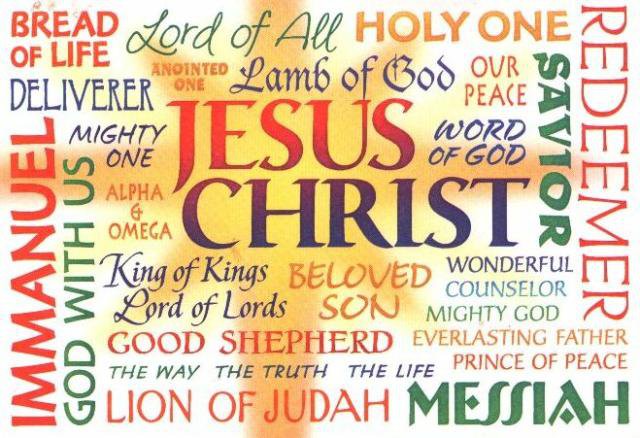
The Bread of Life


If you thought on it for a while you could probably recall most of the specific names and titles in the Bible that describe some aspect of the nature of Jesus.  The scripture calls Him Emmanuel, Lord, Christ, Master, Messiah, Son of God, Son of Man, Prophet, King of the Jews, the Word, Rabbi, Apostle, Mediator, the High Priest, and the new (or last) Adam.  The Bible also uses some descriptive terms to further define Jesus’ nature such as the Light of the World, the Good Shepherd, the Lamb of God, and the Resurrection and Life.  One of my favorite descriptive terms for Jesus is the Bread of Life.

Background:

The only miracle that is recorded in each of the four Gospels is the feeding of the five thousand.  The Gospel of John, chapter six provides us great insight into the nature of Jesus as the Bread of Life.

Here are some questions to ponder before you read further:

  • Do you believe that Jesus is able and willing to provide all that you need in life?
  • Do you tend to trust in yourself to make it day by day?
  • Do you look to others to meet your needs rather than turning to God?
  • Do you have assurance of your salvation?
  • Do you truly know where you will spend your eternity?

Scripture:

I.                 Jesus Knows What is Needed (John 6:5-9 NIV).

 5 When Jesus looked up and saw a great crowd coming toward him, he said to Philip, “Where shall we buy bread for these people to eat?” 6 He asked this only to test him, for he already had in mind what he was going to do.  7 Philip answered him, “It would take more than half a year’s wages[a] to buy enough bread for each one to have a bite!”  8 Another of his disciples, Andrew, Simon Peter’s brother, spoke up, 9 “Here is a boy with five small barley loaves and two small fish, but how far will they go among so many?”

Isn’t it interesting that Jesus asked Philip where they would “buy bread for these people to eat?”  Clearly Jesus already knew what was needed and what He planned to do to feed so many.  Jesus was preparing Philip (and the other disciples) for the miraculous events that would soon unfold.  He was testing their faith in Him to provide for their needs and the needs of the great throng of people gathered to hear Him teach.  Jesus does the same with, and for, you.  He will test your faith in Him to provide for your every need. Don’t be surprised at what Jesus can do for you.  Five loaves and two small fish can go a long way in the hands of the Bread of Life.

II.               Jesus Multiplies What is Available (John 6:10-13).

 10 Jesus said, “Have the people sit down.” There was plenty of grass in that place, and they sat down (about five thousand men were there). 11 Jesus then took the loaves, gave thanks, and distributed to those who were seated as much as they wanted. He did the same with the fish.  12 When they had all had enough to eat, he said to his disciples, “Gather the pieces that are left over. Let nothing be wasted.” 13 So they gathered them and filled twelve baskets with the pieces of the five barley loaves left over by those who had eaten.

The very first thing Jesus told the disciples to do was to have the throng of people sit down on the grassy hillside.  You know that they were hungry.  By sitting down the throng could more easily see what Jesus, and Jesus alone, was about to do.  Jesus gave thanks, took the small amount of bread and fish prepared for one boy, and multiplied it into an overly sufficient meal for “all those who were seated, as much as they wanted.”  But next Jesus told the disciples to “gather the pieces that are left over.”  How could there be any left over?  Isn’t it interesting that there were twelve, yes exactly twelve, baskets full of food left over?  That means one basket for each disciple.  Could there be any question in the minds of the disciples that Jesus would provide for ALL of their needs?  But, this is not the end of the story!!  Jesus had dealt with their physical needs.  Now He would deal with their spiritual needs.

III.              Jesus Reveals What is Important (John 6:24-27).

24 Once the crowd realized that neither Jesus nor his disciples were there, they got into the boats and went to Capernaum in search of Jesus.  25 When they found him on the other side of the lake, they asked him, “Rabbi, when did you get here?”  26 Jesus answered, “Very truly I tell you, you are looking for me, not because you saw the signs I performed but because you ate the loaves and had your fill. 27 Do not work for food that spoils, but for food that endures to eternal life, which the Son of Man will give you. For on him God the Father has placed his seal of approval.”

The feeding miracle was more than enough to convince the crowd that Jesus was the “Prophet who is to come into the world” (John 6:14).  They were looking only at the physical miracle, but Jesus was looking much deeper.  He was preparing them to see the “food that endures to eternal life, which the Son of Man will give you” is the real purpose for His coming to earth.  His “food” would never spoil.  Jesus was not here to establish an earthly kingdom as they had expected.  Instead, He had come to earth to deal with the forgiveness of sin and “eternal life” issues.  “For on him God the Father has placed his seal of approval.”

IV.             Jesus Provides What is Lasting (John 6:32-35).

 32 Jesus said to them, “Very truly I tell you, it is not Moses who has given you the bread from heaven, but it is my Father who gives you the true bread from heaven. 33 For the bread of God is the bread that comes down from heaven and gives life to the world.” 34 “Sir,” they said, “always give us this bread.” 35 Then Jesus declared, “I am the bread of life. Whoever comes to me will never go hungry, and whoever believes in me will never be thirsty.”

Just as the manna (or bread) God provided to the Israelites on their journey from Egypt to the promised land met the physical needs of the people, Jesus as the Bread of Life from heaven would meet their spiritual needs as well.  Through His death on the cross and resurrection He alone would provide a way of forgiveness for all of mankind willing to accept Him as Savior.  Never again will one of His own be hungry or thirsty.

Reflection:   

God not only sent Jesus to provide for your physical needs (bread), He sent Jesus to be the Bread of Life that satisfies your spiritual hunger.  Jesus is concerned about the physical well-being of everyone.  Jesus can provide for our most common and basic needs in life.  Jesus is even more concerned with the spiritual well-being of everyone. The remedy for physical hunger is food; the remedy for spiritual hunger is Jesus Himself. Jesus provides food and drink that never ends and that always satisfies the spiritual needs of those who partake.

Have you partaken of His bread that is … the Bread of Life?  Have you trusted in the Bread of Life as your savior?  If so, will you share your experience with others while joyfully thanking Him for what He has done for you?  If not, then please click on this link:

https://jimdavenport.wordpress.com/2011/03/05/how-to-become-a-christian/

Posted in Uncategorized | 4 Comments

How to Become a Christian


Here are the steps that you need to follow to become a Christian:

  • Realize that you are “lost” – totally estranged from God and separated from God by a sinful nature.  (Romans 3:23 – For all have sinned and come short of the glory of God.)
  • Acknowledge that sin deserves punishment. (Romans 6:23 – For the wages of sin is death, but the gift of God is eternal life through Jesus Christ our Lord.)
  • Acknowledge that Jesus took the punishment for your sins by dying on the cross. (Romans 5:8 – But God demonstrated his love toward us, in that while we were yet sinners, Christ died for us.)
  • Ask Jesus to forgive you of your sins and come into your life. (Romans 10:9 – That if thou shalt confess with thy mouth the Lord Jesus, and shalt believe in your heart that God has raised him from the dead, you shall be saved.)

The way we communicate with God is through prayer.  You can use the following prayer as your own or pray one that contains these elements: 

“Dear God, I admit that I am a sinner.  I recognize that I deserve punishment.  I also know that you died for my sins and that you were raised from the dead.   I turn from self and sin and trust You to be my Savior and Lord.  Take control of my life and help me to be the person that you want me to be.  Save me now and save me forever.  Thank You, Lord, for hearing my prayer and saving my soul.  In Jesus’ name, Amen.”

God promises in the Bible that anyone who accepts Jesus as Lord will be saved.  (Romans 10:13 – For whosoever shall call upon the name of the Lord shall be saved.)  If you prayed the above suggested prayer and meant it, you can be assured that God has saved you.  The Bible offers many other words of assurance about your salvation.  One of the clearest descriptions of that assurance can be found in 1 John 5:11-13 – And this is the record, that God hath given to us eternal life, and this life is in his Son.  He that hath the Son hath life; and he that hath not the Son of God hath not life.  These things have I written unto you that believe on the name of the Son of God; that ye may know that ye have eternal life, and that ye may believe on the name of the Son of God.

Posted in Uncategorized | Tagged , , | 15 Comments

On Radical Islam and Jihad


Please forgive me for pounding on this subject, but a current event that took place in the U.S. caused me to think more … and probe more … on the subject.  I promise that I will return to my more traditional babblings soon. 

The Wall Street Journal reported on Thursday, February 24, 2011 that the “FBI Arrests Suspected Terror Plotter in Texas” in an article by Evan Perez.  Khalid Ali-M Aldawsari is currently a 20 year-old student at South Plains College near Lubbock, Texas.  He has been charged with “attempting to construct improvised explosives and compiling a list of possible targets, including the home of former President George W. Bush.”  For the full article including a picture of Aldawsari and the full Criminal Complaint you can refer to the following website:

http://online.wsj.com/article/SB10001424052748703408604576164342532246126.html?mod=djemalertNEWS

Many of us in the U.S., including the mainstream news media, have suppressed the reality that Muslim terrorists, sold out to their radical form of Islam and Jihad, are already on American soil poised and ready to attack us at an opportune time.  The threat is real and this and many other similar incidents prove it.  Mr. Aldawsari came to the U.S. in 2008 legitimately on a student visa.  In his own words he wrote in a journal that “I excelled in my studies in high school in order to take advantage of an opportunity for a scholarship to America, offered by the [Saudi] government and its companies….Now, after mastering the English language, learning how to build explosives, and continuous planning to target the infidel Americans, it is time for jihad.”

In my previous post “On Egypt and the Muslim Brotherhood” I pointed out the Muslim Brotherhood motto: “Allah is our objective; the Prophet is our leader, the Quran is our law; Jihad is our way; dying in the way of Allah is our highest hope”.   You can read that article by clicking on the link below:

https://jimdavenport.wordpress.com/2011/02/23/on-egypt-and-the-muslim-brotherhood/

Here’s the point of this post … radical Islamists will do whatever it takes to accomplish what they believe Allah has ordained them to do.  In this case, the young student excelled at his high school studies in Saudi Arabia so that he could win a Saudi sponsored scholarship to an American college for the sole purpose of Jihad.  To Muslims, those who do not recognize Allah as their one and only god are “infidels.”  Infidel literally means “one without faith.”  Under that definition, all Americans (other than Muslims) are infidels.  How do you reason with a mindset like this? 

In Matthew 25:43-45, Jesus said “You have heard that it was said, ‘Love your neighbor and hate your enemy.’ But I tell you, love your enemies and pray for those who persecute you, that you may be children of your Father in heaven.“  I must admit that though I believe every word of the Bible to be true and without fault, I am currently struggling with this teaching.  My flesh wants to lash out at this misguided young man and those who coerced him into his satanic beliefs and actions.  But that is not what Jesus would have me do.  I take great consolation in trusting Jesus to carry this burden for me.  You see, I have accepted Him as my Lord and Savior and no matter what happens here on earth I will spend my eternity with Him in heaven.  God allowed the disciple of Jesus named John to look forward in time and see the ultimate outcome for Satan and his followers.  In Revelation 20:10, John writes “And the devil that deceived them was cast into the lake of fire and brimstone, where the beast and the false prophet are, and shall be tormented day and night for ever and ever.”  In Revelation 21:8 God confirms to John that unbelievers “…shall have their part in the lake which burneth with fire and brimstone…” 

Unless this young man has a miraculous conversion, then the Bible teaches, and I believe, that he will spend his eternity in a manner much different from what he expects.

Posted in Uncategorized | Leave a comment

On Egypt and the Muslim Brotherhood


This is the second article I have written recently that touches on Islam.  The first one dealt with some basic comparisons of Christianity versus Islam.  I am not by any stretch of the imagination an expert on Islam and don’t pretend to be.  I am just an average American citizen and a conservative Bible believing Christian.  But it is not hard for me to tell that one of the reportedly “moderate” Islamic groups that received a great deal of press during the recent events in Egypt poses a deep threat to both Middle Eastern and world stability.  The “Muslim Brotherhood,” founded in 1928 by Hassan al-Banna, was repeatedly referred to by the news media as perhaps a positive force that could assist in bringing “democracy” to Egypt.

I’ll be brief and to the point by quoting the motto for the Muslim Brotherhood: “Allah is our objective; the Prophet is our leader, the Quran is our law; Jihad is our way; dying in the way of Allah is our highest hope”. 

How can the USA mainstream news media be so blind when it comes to the Muslim Brotherhood’s intentions?  How can any American in their right mind think that the Brotherhood can assist in bringing about “democracy” in Egypt?  How can they overlook the fact that the Muslim Brotherhood has a long and documented history of  terrorism though they have supposedly abandoned that position.  The Muslim Brotherhood has spawned such groups as “al Qaeda”, “Islamic Jihad” and “Hamas” among others across the Arab world.  Need I say more? 

Democracy as practiced in the Western world is a joke to the Brotherhood.  Western democracy supports the freedom of religion.  The Brotherhood’s idea of democracy would make Islam the state religion.  Western democracy supports multiple political parties.  The Brotherhood would institute a one-party system, outlawing any rivals.  There would be no checks and balances, no guarantees of human rights, no safeguard that would protect the citizens from imposition of Sharia Law.

I do not pretend to have the answer for what Egypt should do.  But I do know that those who think that the Muslim Brotherhood supports a truly democratic outcome for Egypt and should be involved in shaping where the country is going, have either purposefully ignored, or failed to understand, the history of the group and particularly their still existing motto.

To many, it would not be politically correct for this article to be circulated.  Let me just say that I am not trying to be politically correct.  I am thankful that I live in a country where our form of democracy provides for freedom of the press and the freedom of religion.  I am not so naive to believe that everyone who reads this will agree with what I have written.  I am indeed thankful to God that I live in a country that allows me to express myself without fear of reprisal.  In countless Islamic countries I would be immediately condemned to death.  May God help us all as we try to serve Him in such a mixed up world.

Posted in Uncategorized | 2 Comments

Christianity versus Islam


I know that this is a dangerous article for me to write given that it is not politically correct to write anything that can be conceived to be negative about Islam.  But I am compelled to do so because of the nature of the subject.  The current situations in Egypt, Iraq, Afghanistan, Iran, and countless other Islamic countries have captured much of our attention.  We can see the outrage and discontent in the people who protest.  History teaches us that we need to be concerned about where these events will lead us.

Like most of my friends and acquaintances I didn’t know much about religions other than Christianity when I was growing up.  I was raised in the “Bible Belt” in the southern United States.  In my youth it seemed like there was a Christian church on just about every corner.  To say the least, I had no idea what Islam or Muslims stood for nor who they worshiped.  What I did know was that the great Olympic gold medal winner from the 1960 Olympics in Rome, Cassius Clay, announced that he had converted to “The Nation of Islam” and had become a Muslim shortly after winning the heavyweight championship of the world from Sonny Liston in 1963.  At that point Cassius Clay changed his name to Muhammad Ali and declared his allegiance to Allah.  Some told me at the time that “Allah” was just another name for Almighty God and that Muslims worshipped the same God as Christians. 

To tell the truth, just about everyone I knew was ignorant about what Muslims believed including my trusted church leaders. I didn’t pay much attention to the topic for many years.  However, during Jimmy Carter’s presidency the Iranian hostage crisis was in the headlines for almost two years.  Fifty-two US citizens were held hostage for 444 days from November 4, 1979 to January 20, 1981, after a group of Islamic students and militants took over the Embassy of the United States in support of the Iranian Revolution.  The crisis froze the presidency and scenes of Iranian radicals on the nightly news began my education as to how different the Muslim mind was from that of Christians and particularly Christian Americans.

I can still remember the grand jubilation in 1981 when, shortly after President Ronald Reagan was inaugurated, the Iranians released the fifty-two hostages.  Within a year, under Saddam Hussein, Iraq invaded Iran and a long and extended war between these two Islamic countries ensued.  I still didn’t know much about Islam. 

In 1984 I recall reading a Newsweek Magazine article that greatly troubled me.  The article depicted two Muslim fathers, one from Iraq and the other from Iran, which had “lost” their soldier sons in the Iraq/Iran war.  Both of the sons were a mere 12 years old.  The Iraqi father was ecstatic that his son had become a martyr by dying in the war.  The Iranian father was disgusted with his son because he had been captured by Iran and was not martyred.  His son had been sent into battle with little or no training and a rifle that didn’t even fire.  He was included in the horde or human wave of first attackers that would proceed forward in front of the more highly armed and trained elite Iranian troops.  Basically, he was to be sacrificed.  The Iranian father disowned his son though the boy was still alive in an Iraqi prison.  In the interview with the Newsweek reporter, he said that he was ashamed of his son and never wanted to see him again. 

This article had a profound effect on me at the time.  And now, some twenty-seven years later, I can still see the pictures of the fathers and the boys in my mind’s eye.  I am just as perplexed now as I was then.  I couldn’t understand how two fathers could send their twelve-year-old sons to war and hope they would be killed so they would be martyred for the sake of Allah.

Over the years, as my understanding of Islam grew, I got to the point where I realized that the God of the Bible and Islam’s Allah are in no way the same.  They are markedly different.  Unfortunately, countless world political leaders and even some renowned religious leaders continue to promote the belief that we “all serve the same god.”  The fact is that there are so many differences between the two faiths that it is hard to imagine how either side could ever embrace any part of the other’s belief system.  Perhaps that is why Christianity and Islam have been at such odds with each other for centuries and have so little understanding of each other. 

In the aftermath of the 2001 World Trade Center bombing, I recall listening to a message by David Feddes of the “Back to God Hour” entitled “Christianity and Islam”.  The radio program aired on February 3, 2002.  I was so struck by the message that I ordered a printed copy and after it arrived I read it over and over.  Recently I pulled out the message again and was compelled to use its contents to prepare a side by side comparison of the main points mentioned by Mr. Feddes.  I have done my best to accurately reproduce Mr. Feddes’ statements primarily using his own words.  Of course, this is not a comprehensive list, but it served me well as a good quick reference.   

Mr. Feddes and the “Back to God Hour” have granted permission to include this material “in any format” given that credit is given to them.  The information in the table below is thus credited in its entirety to David Feddes and the “Back to God Hour.”  The table starts out with some of the similarities between Christianity and Islam and proceeds to then list some of the major differences between the two as they relate to the nature of God and Allah, beliefs about Jesus and eternal life, and the nature of living in love.  After you have completed your review of the table, I think that you will conclude without question that Christianity and Islam do not serve the same God.

  Christianity Islam
Some Similarities Christianity believes that there is but one god, not many.  He is referred to as God. Islam believes that there is but one god, not many.  He is referred to as Allah.
  Christianity rejects the pagan belief in various gods and goddesses. Islam rejects the pagan belief in various gods and goddesses.
  Christianity rejects pantheistic belief that all things are God or part of God. Islam rejects pantheistic belief that all things are God or part of God.
  Christianity believes in one all-powerful, all-knowing being, with no beginning or end, who rules over all things. Islam believes in one all-powerful, all-knowing being, with no beginning or end, who rules over all things.
  Christianity teaches divine creation, rejects random evolution. Islam teaches divine creation, rejects random evolution.
  Christianity opposes homosexuality and abortion. Islam opposes homosexuality and abortion.
  Christianity emphasizes honesty in business. Islam emphasizes honesty in business.
Who is God? Christianity teaches there is one God and that this one God is a union of three divine persons: Father, Son (Jesus) and Holy Spirit – the Trinity.  The oneness of Father, Son and Spirit is such that it is wrong to speak of three Gods.  There is only one God, an eternal union of love in the Holy Trinity.  When the Bible says “God is love,” it’s not just because God is loving toward us but also because God’s inner being is characterized by the eternal love that unites Father, Son and Holy Spirit. While Islam teaches there is one God, Muhammad rejected the Trinity.  He fiercely opposed the Christian belief that Jesus is the eternal Son of God with the same divine nature as God the Father. He also denied that the Holy Spirit is a divine person.  The Koran threatens painful punishment and hell for those who say Christ is God and who believe in the Trinity.
The Real Jesus Christians believe that Jesus was born of a virgin and that He is the Son of God.  They believe that Jesus is God.  Jesus claimed to be God and proved it by rising from the dead. Muslims believe that Jesus was born of a virgin through a great miracle.  They believe Jesus was a prophet.  They do not accept Jesus as the Son of God.  They do not accept that Jesus is God and claim that many false statements have crept into the Bible over the centuries.  Muslims say that the Koran, not the Bible, is the final authority on understanding who Jesus is.
Eternal Life Christianity teaches that man is born in sin and is in need of a Savior.  The Bible teaches that all have sinned and this includes the biblical heroes and prophets such as Noah, Moses, Isaiah, and David.  Christians are saved by repenting and trusting God to forgive their sins through His Son Jesus. Islam believes that humans are not born in sin and thus do not need salvation.  Instead, they just need the guidance of the Islamic law.  In direct opposition to the Bible, Islam teaches that serious sins were not committed by the prophets of God.
  Christians believe that God chose to come down to earth in a form of a man, Jesus, to die for our sins to purify us and forgive us.  Christians believe that our sins can be paid for by the suffering and death of Jesus. Christians believe that God has given us eternal life, and this life is in his Son Jesus.  If you have the Son as your Savior, then you have eternal life.  Christians trust the death and resurrection of Jesus as the basis of forgiveness and eternal life.  Islam bases eternal life on how good a person is.  A Muslim seeks eternal life by working for it.  Islam teaches that man of his own effort has the ability to do what is necessary to have eternal life.  To do so, a Muslim must submit to and faithfully keep the Five Pillars of Islam:

  1. declare that there is no god except the god, Allah, whose prophet is Muhammad;
  2. pray five times each day;
  3. give to the poor;
  4. fast each year during the month of Ramadan;
  5. if possible, go on a pilgrimage to Mecca, the city where Muhammad established Islam. 

In addition, a Muslim must submit to the many other rules and regulations in the Koran to earn entrance into heaven. 

  Christians believe that Jesus died on the cross to pay the penalty of sin for all who trust him. Jesus rose from the dead to give joyous eternal life to His people.  This salvation is a free gift of God to all who believe and entrust themselves to Jesus. Muslims teach that Jesus never died.  Instead, they say that Jesus’ enemies thought they killed him but were fooled by appearances and that Jesus went directly to heaven without dying.
Living in Love The Bible tells us of an incident where a woman caught in adultery was brought to Jesus.  Some wanted to stone her, but Jesus spared her life and told her, “Go now and leave your life of sin” (John 8:11). The Koran tells of an incident where a woman came to Muhammad after getting pregnant through adultery.  Muhammad treated her decently until she gave birth, and then had her stoned to death.
  Christianity is rooted in the love of Jesus, who chose to lay down his life to pay for the sins of others.  In the three centuries following His resurrection, Jesus’ followers spread His message by preaching, persuasion, and love. Muhammad used military measures to advance Islam and after his death, Islam spread to other countries through military conquest.
  Nations today with a biblical background basically enjoy freedom including speech and freely elected governments. Nations today that emphasize Islamic law have limited freedom, limited freedom of speech, and few freely elected governments.
  Christians believe that God designed marriage as a lifelong union of love between one man and one woman and that it is wrong to divorce without just cause.  The Bible teaches that husbands are to love their wives enough to die for them, as Christ gave himself for His bride, the church (Ephesians 5:25). Islamic law allows men to beat their wives.  Men are allowed to have up to four wives.  If a man divorces his wife, he gets to keep the children.
  Christians believe that God is a great King.  He is the Father.  He is a friend who made a huge sacrifice to pay for the sins of those he loves.  God is a close companion who lived among us in the person of Jesus.  Christians approach God with reverence and awe but pray to Him in confidence.  God dwells within man in the form of the Holy Spirit. The god of Islam, Allah, is a master who deals with his servants on the basis of whether they follow his rules.

My intent with this article is not to cause further division between Christians and Muslims.  I am proud to say that I am an unashamed Christian and believe that God and His Holy Word, The Bible, are the final revelation of the one and only true God. 

Shortly after the 2001 terrorist attack on the World Trade Center I had the privilege of teaching a Bible class to six Iranian refuges that had been relocated to the United States through an international refuge relief organization.  Each of these six men had been raised as Muslims and each had converted to Christianity after leaving Iran.  Most were eager to learn about the sufficiency of the Bible, God, Jesus and the Holy Spirit and leave their Islam faith behind as they started new lives in America.  They were no longer welcome in Iran and would never be able to return to their homeland.  Over the period of approximately one year each man found a good job and gradually integrated into society as constructive citizens.  One man in particular, Akbar, was an ardent witness for Jesus.  I will never forget that experience and trust that God is continuing to use each of these men to relate the truth about Almighty God and Allah to everyone they meet.

In closing, I am not trying to fuel the flames of hatred.  I am simply trying to point out that the god of Muhammad is not the Father of Jesus Christ.  I pray that you will place your trust in the Lord Jesus as your savior.  Jesus is the way to salvation and there is no other way.

Posted in Uncategorized | 2 Comments

Salvation Brings About Positive Change


Special Note: This article is included in Jim’s book “Christian Devotions & Quick Studies” along with 33 other articles and is available for purchase in Hardback, Paperback and eBook formats at this link:  Jim’s Books

Support independent publishing: Buy this book on Lulu.

Get Jim’s FREE eBooks Here!!

Background:

As a management and technology consultant for much of my working career I have often referred to myself as a “change agent”.  My job has been to survey and study current business processes and the underlying technology, offer advice on how to streamline those processes and improve the technology, outline the strategy for making the process and technology changes a reality, and then manage the projects that will make the change happen.  I must admit that this has not always been a comfortable process.  I have often met major resistance.  By nature it is difficult for corporations, both large and small to make changes.  Processes and traditions become ingrained.  The old adage “if it ain’t broke, don’t fix it” is often the default fall-back position, whether it applies or not.  Some never see the need for change.  Others might recognize the need for change but are unwilling to embrace it.

Regardless of whether we want to embrace it or not, some change is inevitable.  Who would want to live without the marvelous modern-day inventions we take for granted such as running water, electricity, computers, the internet, automobiles, airplanes, and on and on.  On the other hand, some things never change and shouldn’t.  Almighty God never changes.  He is constant.  His word, the Bible, is constant.  The advice provided in the Bible is timeless and without error.  It works.  It does not change.

When one becomes a Christian, things change.  We need to get on board with God.  The salvation experience demands change … permanent change.  Our will must give way to God’s will.   With God’s help, we are required to adopt the kind of change that affects our lifestyle and attitude.  Our behavior must be different and aligned with God’s direction for our lives.

The Bible gives advice in Romans 6:12-23 on the kind of change that is expected as a result of our salvation experience.  Here’s the scripture passage under consideration.

A Change in Behavior – Romans 6:12-14 (NIV)

11 In the same way, count yourselves dead to sin but alive to God in Christ Jesus. 12 Therefore do not let sin reign in your mortal body so that you obey its evil desires. 13 Do not offer any part of yourself to sin as an instrument of wickedness, but rather offer yourselves to God as those who have been brought from death to life; and offer every part of yourself to him as an instrument of righteousness. 14 For sin shall no longer be your master, because you are not under the law, but under grace.

These verses contrast the “before” and “after” conditions expected by God for the Christian.  When we accept Jesus as our Savior, He comes into our heart and rules over our lives.  We are no longer ruled by our sin nature.   Our evil desires are replaced with His desires.  Sin no longer rules over us.  This is the kind of positive change that God expects and supports.

A Change in Allegiance – Romans 6:15-18 (NIV)

 15 What then? Shall we sin because we are not under the law but under grace? By no means! 16 Don’t you know that when you offer yourselves to someone as obedient slaves, you are slaves of the one you obey—whether you are slaves to sin, which leads to death, or to obedience, which leads to righteousness? 17 But thanks be to God that, though you used to be slaves to sin, you have come to obey from your heart the pattern of teaching that has now claimed your allegiance. 18 You have been set free from sin and have become slaves to righteousness.

How silly it is that some believe that since they are saved by grace, that they can continue to sin without consequence since Jesus paid the price for their sins.  The salvation experience requires a new allegiance, a change of heart.  We are no longer “slaves” to sin.  God is now our “master” and we must obey Him.  We have been set free from the stronghold of sin.  Old ways of behavior give way to new behaviors.  We will want to do what is right.  This is the kind of change that affects the whole person, both outward and inward.  The change is obvious.  Others see it.  God honors it.

A Change in Direction – Romans 6:19-23 (NIV)

 19 I am using an example from everyday life because of your human limitations. Just as you used to offer yourselves as slaves to impurity and to ever-increasing wickedness, so now offer yourselves as slaves to righteousness leading to holiness. 20 When you were slaves to sin, you were free from the control of righteousness. 21 What benefit did you reap at that time from the things you are now ashamed of? Those things result in death! 22 But now that you have been set free from sin and have become slaves of God, the benefit you reap leads to holiness, and the result is eternal life. 23 For the wages of sin is death, but the gift of God is eternal life in Christ Jesus our Lord.

These verses teach us that the Christian is no longer a slave to sin but rather a slave to righteousness.  Obedience to sin is replaced by obedience to righteousness.  Sin was once the master, but now God is the Master.  Wickedness gives way to righteousness.  Death (the wages of sin) is replaced by eternal life.  These are dramatic changes in direction.

Reflection:

There are really only two ways to live in this world – in sin or in righteousness.  Sin damages relationships, brings about shame, affects self-worth, impacts integrity, and ultimately leads to eternal death.  Righteousness brings about joy, satisfaction, effective relationships, happiness and positive growth into what God wants us to be.  Salvation brings about positive change for the Christian.  What is your attitude toward sin?  Christians do not want to sin!  Christians want to be all God intends them to be!

Consider these truths derived from this discussion:

  • Christians serve God best by realizing that they are not under law but under grace.
  • Being under grace does not mean that Christians need not worry about sin.
  • Christians should live as slaves to righteousness and God, not as slaves to sin and self.
  • Sin has consequences – deeds that bring shame and eventually eternal death.
  • We cannot earn eternal life – it is the gift of God through Jesus Christ our Lord.

Perhaps you have read this far and realize that you are not a Christian.   If that is the case, then please refer to the section below on how to become a Christian.

How to Become a Christian:

Here are the steps that you need to follow to become a Christian:

  • Realize that you are “lost” – totally estranged from God and separated from God by a sinful nature.  (Romans 3:23 – For all have sinned and come short of the glory of God.)
  • Acknowledge that sin deserves punishment. (Romans 6:23 – For the wages of sin is death, but the gift of God is eternal life through Jesus Christ our Lord.)
  • Acknowledge that Jesus took the punishment for your sins by dying on the cross. (Romans 5:8 – But God demonstrated his love toward us, in that while we were yet sinners, Christ died for us.)
  • Ask Jesus to forgive you of your sins and come into your life. (Romans 10:9 – That if thou shalt confess with thy mouth the Lord Jesus, and shalt believe in your heart that God has raised him from the dead, you shall be saved.)

The way we communicate with God is through prayer.  You can use the following prayer as your own or pray one that contains these elements:

“Dear God, I admit that I am a sinner.  I recognize that I deserve punishment.  I also know that you died for my sins and that you were raised from the dead.   I turn from self and sin and trust You to be my Savior and Lord.  Take control of my life and help me to be the person that you want me to be.  Save me now and save me forever.  Thank You, Lord, for hearing my prayer and saving my soul.  In Jesus’ name, Amen.”

God promises in the Bible that anyone who accepts Jesus as Lord will be saved.  (Romans 10:13 – For whosoever shall call upon the name of the Lord shall be saved.)  If you prayed the above suggested prayer and meant it, you can be assured that God has saved you.  The Bible offers many other words of assurance about your salvation.  One of the clearest descriptions of that assurance can be found in 1 John 5:11-13 – And this is the record, that God hath given to us eternal life, and this life is in his Son.  He that hath the Son hath life; and he that hath not the Son of God hath not life.  These things have I written unto you that believe on the name of the Son of God; that ye may know that ye have eternal life, and that ye may believe on the name of the Son of God.

Posted in Uncategorized | 1 Comment

Is Anything too Hard for God?


Special Note: This article is included in Jim’s book “Christian Devotions & Quick Studies” along with 33 other articles and is available for purchase in Hardback, Paperback and eBook formats at this link:  Jim’s Books

Sometimes it seems like you are facing insurmountable odds.  This is especially true in times of great personal difficulty.  You’ve tried everything on your own, including seeking the help and trusted advice of others and nothing seems to work out positively.  Is your health failing?  Are you facing life threatening surgery?  Are you worried that you are about to lose your job?  Is it tough to make ends meet financially?  Is your home facing foreclosure?  Is your business about to fail?  Is your marriage in trouble?  Have you recently lost your partner or a dear loved one?   Are you near the point of despair?  Are you starting to believe that there is nothing that can be done?

Perhaps the problem you are facing is not a personal one.  For example, in these tough economic times is your church facing what seems to be an insurmountable obstacle?  According to recent reports in the Atlanta, Georgia area, almost 100 churches are under some stage of foreclosure with more than 130 church buildings currently for sale in January, 2011.  Out of this number, half have already been sold or taken over by lenders due to foreclosure.  Additionally, countless churches have significant revenue issues and are either currently unable, or will soon be unable, to meet their financial obligations.  This is a certainly a perplexing time for the church members.

If you are already a Christian and currently in such a situation, let me encourage you to trust your Heavenly Father, the Almighty God, to provide a solution.   God wants to accomplish His purpose through His servants and through His church.  He wants the very best for you.  He cares for His own.  He created you and knows your every need.  The Bible is God’s divinely inspired word.  It is His guide for our lives.  The Bible teaches us that nothing is too hard for God!

If you are not a Christian, then as a first step in seeking God’s help in your situation, let me encourage you to refer to the last section of this article on “How to Become a Christian”.  Then, return to the next section and read on. 

Background:

1.     God keeps His promises.

Genesis 18:10-14 (All scriptures KJV)

 And he said, I will certainly return unto thee according to the time of life; and, lo, Sarah thy wife shall have a son. And Sarah heard it in the tent door, which was behind him.  Now Abraham and Sarah were old and well stricken in age; and it ceased to be with Sarah after the manner of women. Therefore Sarah laughed within herself, saying, After I am waxed old shall I have pleasure, my lord being old also? And the LORD said unto Abraham, Wherefore did Sarah laugh, saying, Shall I of a surety bear a child, which am old? Is anything too hard for the LORD? At the time appointed I will return unto thee, according to the time of life, and Sarah shall have a son.

In Genesis 12 God called Abraham to leave his native land and go to a place that God would show him.  God promised that he would make Abraham the father of a great nation, make his name great, bless those who blessed him, and curse those who cursed him.  Abram followed God’s leadership and left his home.  Many years passed by and Abraham was concerned that God had not yet kept his promise for he and his wife Sarah were childless.  In Genesis 15 God assured Abraham that he would indeed keep His promise.   More time passed and at the age of 99, Abraham still had no heir and Sarah was well beyond child bearing age.  It is at this point that we come to the scripture passage above in Genesis 18.  Abraham is confronted by one of his three visitors with the rhetorical question “Is anything too hard for the Lord?” And he is promised that Sarah would indeed have a son within the “appointed time” which was approximately one year away.  Sarah overheard the conversation and laughed to herself thinking that both she and Abraham were too old to have a child.  But time would prove that nothing is too hard for God.  He can accomplish what seems to us to be impossible.

2.     Our faith is often the key to receiving God’s promises.

Hebrews 11:11 

Through faith also Sarah herself received strength to conceive seed, and was delivered of a child when she was past age, because she judged him faithful who had promised.

The writer of Hebrews records that Sarah did indeed have faith that God could do what said he would do.  Sarah conceived and Isaac was born as the son through which God’s promise would be fulfilled.  As a side note, Abraham was 100 years of age and Sarah was 90 at the birth of Isaac.  The statement that God is making to the world not only here but throughout the Bible is that there are absolutely no earthly circumstances that hinder Him from doing anything that He wants to do.  Our faith is often the key to receiving God’s promises.

3.     Who can match the awesome power of God?

Jeremiah 32:17 

Ah Lord GOD! behold, thou hast made the heaven and the earth by thy great power and stretched out arm, and there is nothing too hard for thee.

Who can match the awesome power of God?  By His outstretched arm he made the heavens and earth and all of vast universes that surround us.  Our abilities don’t amount to even a speck when compared to God. Who are we to doubt that God can do what He says?  God is not limited by our human frailties.  He is Omnipotent, All Powerful, Almighty  … Is anything too hard for God?

We should never allow our thinking to persuade us to think that just because we think that something is too hard for us to accomplish that it is also too hard for God.  Luke 18:27 Jesus tells His disciples that “the things which are impossible with men are possible with God.”  Mark 10:27 is a parallel passage and it states “And Jesus looking upon them saith, with men it is impossible, but not with God: for with God all things are possible.”

 4.     God cares about you!

 1 Peter 5:7 

Casting all your care upon him; for he careth for you.

As a Christian, you have a loving and caring Father.  He gave you the Holy Spirit to dwell within you.  That, in and of itself, is miraculous.  God chose to take up residence within us to accomplish His purpose.  This God that cares for you is the same God that can accomplish anything.  Nothing limits Him.  Nothing is too hard for Him.

Reflection:

Going back to my opening comments … will you allow God to accomplish for you what you are not able to accomplish for yourself?  Don’t let doubt convince you that God cannot accomplish what He says.  Stretch your faith to believe that God is true to His word.  Make it your earnest prayer that God will intervene in your circumstances.  Believe in Him and know that He will keep His promises.  No matter the situation, nothing is too hard for God.  Here are some truths that you can count on: 

  • Doubt can sometimes be God’s faith stretcher.
  • Faith is always better than the alternative.
  • Scripture teaches we can cast all of our cares on Him.
  • Nothing is impossible when we put our trust in God and rest upon His word.
  • Nothing, absolutely nothing, is too hard for God!!

If your church is a New Testament based, Bible believing entity that is facing seemingly insurmountable odds, be assured that God knows about your circumstances.  Everything that has been written here applies to God’s church as well as to individuals.  Don’t lose hope and curtail those doubts.  God is the God of miracles.  Nothing is too hard for God!

How to Become a Christian:

Here are the steps that you need to follow to become a Christian:

  • Realize that you are “lost” – totally estranged from God and separated from God by a sinful nature.  (Romans 3:23 – For all have sinned and come short of the glory of God.)
  • Acknowledge that sin deserves punishment. (Romans 6:23 – For the wages of sin is death, but the gift of God is eternal life through Jesus Christ our Lord.)
  • Acknowledge that Jesus took the punishment for your sins by dying on the cross. (Romans 5:8 – But God demonstrated his love toward us, in that while we were yet sinners, Christ died for us.)
  • Ask Jesus to forgive you of your sins and come into your life. (Romans 10:9 – That if thou shalt confess with thy mouth the Lord Jesus, and shalt believe in your heart that God has raised him from the dead, you shall be saved.)

The way we communicate with God is through prayer.  You can use the following prayer as your own or pray one that contains these elements:

“Dear God, I admit that I am a sinner.  I recognize that I deserve punishment.  I also know that you died for my sins and that you were raised from the dead.   I turn from self and sin and trust You to be my Savior and Lord.  Take control of my life and help me to be the person that you want me to be.  Save me now and save me forever.  Thank You, Lord, for hearing my prayer and saving my soul.  In Jesus’ name, Amen.”

God promises in the Bible that anyone who accepts Jesus as Lord will be saved.  (Romans 10:13 – For whosoever shall call upon the name of the Lord shall be saved.)  If you prayed the above suggested prayer and meant it, you can be assured that God has saved you.  The Bible offers many other words of assurance about your salvation.  One of the clearest descriptions of that assurance can be found in 1 John 5:11-13 – And this is the record, that God hath given to us eternal life, and this life is in his Son.  He that hath the Son hath life; and he that hath not the Son of God hath not life.  These things have I written unto you that believe on the name of the Son of God; that ye may know that ye have eternal life, and that ye may believe on the name of the Son of God.

Posted in Uncategorized | 10 Comments

Facing Tough Times


Opening Thought:

Have you ever faced really tough times? A number of my friends and family and even I have done so lately. As I pondered this recently I recalled a previous time when I had taught a lesson on the topic more than fifteen years ago. It is a given that all of us will face tough times at one time another in our lives. Some people move from one crisis to the next . . . illness of parents, personal illness, rebellious teenagers, depression, job loss, financial burdens, divorce, the so-called “mid-life crisis”. The list is endless.

The Bible provides so much sound advice on how to handle tough times. In Matthew 6:25-34 Jesus tells us not to worry about our life or about tomorrow. God feeds the birds and clothes the fields and we are much more valuable to Him than these and He will most certainly provide for us. In Philippians 4:6 (NIV) Paul tells us “Do not be anxious about anything, but in every situation, by prayer and petition, with thanksgiving, present your requests to God.” There is no need to doubt that God will provide His gifts and blessings, but you should also expect that hard work and personal sacrifice may be required on your part as well. We should never forget that we belong to God. He made us. He paid the price for us through Jesus’ death on the cross. His Holy Spirit dwells within us as born again Christians. We are precious to Him. 1 Corinthians 6:19-20 (NIV) tells us “Do you not know that your bodies are temples of the Holy Spirit, who is in you, whom you have received from God? You are not your own; you were bought at a price. Therefore honor God with your bodies.”

Background:

Paul constantly faced crisis situations in his ministry. Being rightly connected to God allowed him to weather the storms successfully. We can learn from the example of how Paul faced a major crisis in his ministry recorded in Acts chapter 27.

Prior to the events covered below, we find Paul in Roman barracks in Jerusalem. He had been taken there from the Sanhedrin where the Sadducees and Pharisees were violently arguing over his fate. The following night Jesus appeared to Paul and assured him to keep the faith and that he would testify about Christ in Rome just as he had done in Jerusalem (Acts 23:11).

The next day forty Jews formed a conspiracy under oath to kill Paul. Word of this reached the Roman commander and Paul was removed by night to Caesarea where he was turned over to the governor who said that he would hear Paul’s case when his accusers arrived. Paul was kept under guard in Herod’s Palace. After some two years in prison it was evident that Paul would not receive justice in the local provincial court. Therefore, Paul exercised his right as a Roman citizen to appeal his case to Caesar. By Roman law this appeal could not be withdrawn. Even though Festus and King Herod Agrippa were convinced of Paul’s innocence and determined that he could be set free (Acts 26:32), they had no choice but to send Paul to Rome to appear before Caesar.

So Paul and some other prisoners were handed over to a centurion named Julius and the long trip to Rome started. Early on the winds were not favorable and significant time was lost. The stormy Mediterranean hurricane season was just ahead as they finally left Crete on what they thought were more favorable winds. Almost immediately the winds turned into a full-blown hurricane. The winds howled for days and the crew threw cargo and tackle overboard to lighten the load. The situation was desperate.

I. When All Hope Is Gone (Acts 27:20 NASB).

20 Since neither sun nor stars appeared for many days, and no small storm was assailing us, from then on all hope of our being saved was gradually abandoned.

It would have been very important to the ship’s navigator to be able to see the sun and stars as that was the only method available to them to guide the ship to its destination. It seemed that the crew and other prisoners were blind to the possibilities and without hope. That is true of so many of us today. Our usual methods of navigating life sometime seem to be useless. But, we have the power of Almighty God available to us. We belong to Him. He will not let us flounder but will guide us through even the darkest night or the strongest storm. He will never abandon us.

II. Have Faith in God (Acts 27:22-25 NASB).

22 Yet now I urge you to keep up your courage, for there will be no loss of life among you, but only of the ship. 23 For this very night an angel of the God to whom I belong and whom I serve stood before me, 24 saying, ‘Do not be afraid, Paul; you must stand before Caesar; and behold, God has granted you all those who are sailing with you.’ 25 Therefore, keep up your courage, men, for I believe God that it will turn out exactly as I have been told.

Paul had faced such dire circumstances before and God had delivered him. Paul expressed with absolute confidence to those on the ship with him that “there will be no loss of life among you”. Paul went on to say that he belonged to God and there was no reason for him to be afraid. God’s angel had assured him that he would stand before Caesar and that “those who are sailing with you” will be safe as well. The ship would be lost, but all lives would be saved. We, too, should remain courageous in the face of difficult circumstances. Deuteronomy 31:6 tells us to “Be strong and courageous. Do not be afraid or terrified because of them, for the LORD your God goes with you; he will never leave you nor forsake you.” What a promise!

III. Don’t Give Up the Ship (Acts 27:30-31 NASB).

30 But as the sailors were trying to escape from the ship and had let down the ship’s boat into the sea, on the pretense of intending to lay out anchors from the bow, 31 Paul said to the centurion and to the soldiers, “Unless these men remain in the ship, you yourselves cannot be saved.”

Some of the sailors “pretended” to lower the anchors. Pretending is never a good way to deal with a crisis. This is the ostrich approach. Just bury your head in the sand and the crisis will go away. Trying to run away from or ignore a crisis is a poor way to deal with tough circumstances. Remaining in the center of God’s will allows Him to do the work and to provide what you need to face the impending crisis. There is no substitute for this. You can’t substitute things for God. There is no substitute for His guidance. Dr. Phil doesn’t have anything on God. Which one would you rather trust and lean upon in a crisis situation?

IV. Take Care of Yourself (vv. 33-36).

33 Until the day was about to dawn, Paul was encouraging them all to take some food, saying, “Today is the fourteenth day that you have been constantly watching and going without eating, having taken nothing. 34 “Therefore I encourage you to take some food, for this is for your preservation, for not a hair from the head of any of you will perish.” 35 Having said this, he took bread and gave thanks to God in the presence of all, and he broke it and began to eat. 36 All of them were encouraged and they themselves also took food.

There is a lesson here in these verses for those facing tough times. In the midst of a crisis, you still have a responsibility to minister to the body as well as the soul. You can be easily consumed by the crisis and it will only get worse when you don’t attend to your everyday needs. This includes proper sleep, nourishment, exercise, shelter, fresh air, etc. Our physical needs are important to God as well as our spiritual needs. Paul was not ashamed to give thanks to God for His blessings in public. We should be no less ashamed to thank God for our blessings, especially in public. By doing so we also teach our children that prayer is important. Our public “blessings” are also an encouragement to others to be bold in their witness about God.

In the remainder of Acts 27 and further in Acts 28, Luke describes what happened to Paul and the others on the ship afterward. Though the ship did run aground and was destroyed, all of those on the ship survived and remained on the isle of Malta for a period of some three months. Their journey resumed on another ship and Paul eventually arrived in Rome where he resided in a private residence with only a Roman guard to watch over him. The closing verses of Acts 28 (NIV) tell us “30 For two whole years Paul stayed there in his own rented house and welcomed all who came to see him. 31 He proclaimed the kingdom of God and taught about the Lord Jesus Christ—with all boldness and without hindrance! “

Paul witnessed to Jew and Gentile. This would not be the last crisis in his life. God clearly was not through with Paul as he still had much to do in encouraging Christians to spread the message that Jesus is the long-awaited Savior that the world had been waiting for. Can we doubt that Paul continued to trust God to bring him through each and every crisis?

Closing Thought:

A crisis is a time of testing, a time that reveals what we’re truly made of. To face danger, we need to be grounded in God’s love and provision. Paul certainly passed the test. Do you? Paul was salt and light in the midst of the storm. He helped preserve morale, order, and health on the ship. He also brought the light of God’s revelation to bear on the desperate situation. We can do the same in our own perilous and difficult situations. We must place our trust in the God we serve as we seek to reach people and in the times of crisis. As you reflect on this topic in the days ahead remember these truths:

  • Christians will face difficult situations just as Paul did.
  • Trouble is inevitable, but Christians have the resources to face it with grace.
  • Christians are equipped by God to give comfort and encouragement to others.
  • God can use anyone to accomplish His purposes.

Is there someone in your life or the life of your church who has overcome great difficulties to follow God’s will? Celebrate this accomplishment as an encouragement to your life as you face your next crisis.

Posted in Bible Studies, Christian Devotions, Uncategorized | Tagged , , , , , , , , , , , , , , , , , , , , , , , , , , , , | 3 Comments

On the Sanctity of Life and Abortion


Background:

Friends, I am burdened by the way that we so easily brush off the “lawful” murder/sacrifice of unborn children in the US.  I believe that God will place our complacency toward this genocide alongside that of what Hitler did to the Jews through their mass slaughter.  Since abortion has been “lawful” in the US, over 40 million unborn babies have never seen the light of day.  As so many consider the decision to abort a child solely that of the mother, I wonder if those same people could agree that it is also the mother’s right to kill her baby after it is born.  Our law calls that murder, but the abortion/murder decision is the sole privilege of the mother.  I find this totally inconsistent from a human law standpoint.  More important it is clear that the Bible teaches that abortion is murder.  Would you pray during this “Sanctity of Life” week that God will intervene in this terrible genocide and allow man to truly see the error of his ways?  May God forgive us as Christians for such complacency and urge us to tell everyone we know that as a society we will pay for the consequences of our collective sin.

The comments below are summarized from a Sunday School lesson I first taught to a married couple’s class in 1994 and have updated recently.  They offer some biblical background on valuing human life.  Unfortunately, it has only gotten worse in these past 17 years.

Discussion:

During the 20th century, humans have lived through the greatest period of change in the history of the world.  Discoveries by natural science and countless new technical inventions have provided us with previously unheard of luxuries such as personal computers, iPhones, iPods, iPads, etc.  However, during this same period, moral and spiritual values that withstood the test of the ages have gone into major decline.  Our spiritual senses have been dulled primarily due to the influence of materialism.  Everyday conduct that was condemned by previous generations has been commonly accepted as a life-style by today’s generation.

Particularly noticeable in today’s society is the lack of value placed upon human life.  Just look at some of the evidences that the value is cheap:  the rising murder rate; the advent of car-jacking and senseless killings; the controversy over euthanasia and voluntary suicide; the violence and illicit sex which fills our streets, movies, television, and communities; and perhaps the most telling of all, the millions of aborted babies who were never given a chance to be what God planned for them to be when they were conceived.

Sadly, many adults prefer to change the subject when the topic of sanctity of life and abortion arises.  Most prefer to let others deal with the abortion issue.  But unfortunately, there is no way we can avoid this crucial issue.  Directly or indirectly, each of us is affected by the decisions enacted by our government in relation to abortion.  There really is no middle ground on this issue with God.  Let’s look to the Bible for God’s directive.

Scripture:

I.    All human life comes from God (Gen. 1:27).

Genesis 1 (NIV)

27 So God created man in His own image, in the image of God he created him; male and female he created them.

The Hebrew word for “create” is used only of God.  It expresses the incomparable creative activity of God.  While it is possible for people to invent or even to discover, only God can create.  Consider how God made the first human Adam. (Gen 2:7)  God breathed into man the “breath of life”, and that is what makes man unique on this earth.  John 4:24 tells us that “God is spirit, and His worshipers must worship in spirit and in truth.”  If we are created in His image, then we too are spirit.  Jeremiah 1:5 tells us about how God views the pre-born child by stating “Before I formed you in the womb I knew you, before you were born I set you apart; I appointed you as a prophet to the nations.” A person’s worth to God does not depend on age, gender, or nationality.

II.   Jesus instructs Christians to influence society (Matt. 5:13-16) (all scriptures are NIV unless otherwise noted).

13 “You are the salt of the earth. But if the salt loses its saltiness, how can it be made salty again? It is no longer good for anything, except to be thrown out and trampled underfoot. 14 You are the light of the world. A town built on a hill cannot be hidden. 15 Neither do people light a lamp and put it under a bowl. Instead they put it on its stand, and it gives light to everyone in the house. 16 In the same way, let your light shine before others, that they may see your good deeds and glorify your Father in heaven.

Christians are the “salt” of the earth.  We lose our “saltiness” when we do not stand up for what is right.  Eventually the lack of saltiness leads to the loss of purpose.  We are also to be visible in the world (light), not hidden away from view.  Christians must express their convictions regarding crucial moral issues such as abortion, pornography, child abuse, homosexuality, and substance abuse.  I contend it is “right” for a Christian to take a stand and strongly urge those in government to correct the wrongs we see in our society. Christians must take the initiative to be salt and light on the abortion issue.

 III.  Jesus calls us to a new attitude concerning the value of Human Life (Matt. 5:21-22).

21 You have heard that it was said to the people long ago, ‘You shall not murder, and anyone who murders will be subject to judgment.’ 22 But I tell you that anyone who is angry with a brother or sister will be subject to judgment. Again, anyone who says to a brother or sister, ‘Raca,’ is answerable to the court. And anyone who says, ‘You fool!’ will be in danger of the fire of hell.

The sixth commandment tells us that murder is wrong.  How can people seem to have great understanding of the commandments of God and fail to see this command as it relates to the pre-born baby?  Jesus speaks about man’s outward appearances and inward thoughts in verse 22 and tells us that we will be subject to judgment.  It is clear from the scripture that man be judged by God on the abortion issue.  Regardless of what you think about abortion, God’s position is clear.  It is murder.  The term “Raca” is a reproach used by the Jews in the time of Christ, meaning “worthless.”  The Jews used it as a word of contempt. It is derived from a root meaning “to spit.”  Is there really a question in your mind on where Jesus stands on the issue of abortion?

IV.   Jesus commands us to live with sexual purity (Matt. 5:27-28).

27 You have heard that it was said, ‘You shall not commit adultery.’28 But I tell you that anyone who looks at a woman lustfully has already committed adultery with her in his heart.

President Jimmy Carter got in trouble with the news media for admitting that he had “lusted” in his heart and for stating that he was a “born again” Christian.  The teaching of Jesus clearly indicates that inward lust is sin … not just the outward act of adultery.  This is different from what was being taught and practiced by the Jewish leadership based on their interpretation of the scriptures. Sexual attraction was created by God and is to be limited to the confines of marriage.  Lust is the product of Satan and has been adopted by the sinful nature of man.  Lust has been marginalized and popularized in our modern-day through movies, television and advertising.  At every turn we are bombarded with messages that encourage us to accept sinful and sexual pleasures as a normal lifestyle.  Couples live together outside of marriage in open defiance of God’s word.  Countless Fortune 500 companies use sex as the central point of their message to sell their product.  Ultimately the abortion issue just blends into our tolerance for immorality.  In 1 Corinthians 9:27 Paul calls Christians to be accountable for their conduct and “bring their bodies into subjection.”

V.    Jesus demands that we value all human life (Matt. 5:43-45a).

43 You have heard that it was said, ‘Love your neighbor and hate your enemy.’ 44 But I tell you, love your enemies and pray for those who persecute you, 45 that you may be children of your Father in heaven.”

Christian love as described by Jesus compels us to love all individuals, even our enemies.  Such love includes protecting those individuals who cannot defend themselves.  Some might argue that Christians have no responsibility in changing the attitude of our nation toward abortion.   I contend that Christians have a deep responsibility to defend the un-born child, to counsel the unwed mother that there are alternatives to abortion, to counsel a mother who has had an abortion that God will forgive her of her heinous sin,  and to persuade  a couple who is considering abortion not to terminate an unplanned pregnancy.  

Reflection:     

If all of human life comes from God, will you follow God’s example and consider all life precious and sacred?  How will you as a Christian influence our society?  It is not enough to sit back and let someone else do it for you.  A healthy and growing relationship with God means that our attitudes and actions must change to promote the value and worth of all people, particularly those who never get a chance to be born for the first time.

The link below will take you to a video posted on Facebook by the Valley Baptist Church in Bakersfield, California.  It is a wonderful depiction of the unborn child’s life cycle.  I urge you to spend the few minutes it takes to view it and then pray that God will embolden you to take action about the pitiful human tragedy “we the people” are allowing to continue by “law” in the United States of America. 

http://www.facebook.com/video/video.php?v=488452018044

Posted in Bible Studies, Christian Devotions, Uncategorized | Tagged , , , , , , , , , , , , , , , , , , , , , , , , , | 3 Comments

On Proper Corporate Worship


Background:

I suppose you will just have to classify me as old-fashioned and not “with it”, but lately I have become alarmed about the direction of so many of our modern-day churches when it comes to corporate worship. I subscribe to the truth that all of our life should be devoted to worship, not just when we are together as a group. Thus, my comments here have to do only with the regular worship services conducted in our churches on the Sabbath. Sadly, I have observed more and more congregations turning away from the Biblical worship model (psalms, hymns, scripture, prayer, offering including tithing and giving, Bible based preaching, invitation to receive Christ as Savior, communion, baptism) in favor of a crowd pleasing, self-serving program designed to make people feel good.

After all, life is hard. So why shouldn’t the church be a place where you can go to feel better about yourself and things in general. Perhaps that is why we are seeing so many churches turn to services that are based on emotionalism, multi-media entertainment, repetitive praise/mood music and sermons that downplay the consequences of sin and the sacrificial blood of Christ. Sometimes it is hard to recognize how a church differs from the outside world as so much of the world has been brought into the church. Please, even if you disagree with me at this point, continue to read on as I think I have something important to say that may cause you to think about your church and how your church conducts “worship.”

Discussion:

Before we go further, consider the following scripture recorded by the Hebrew writer and dictated by the Almighty and Everlasting God.

Hebrews 1:10-12 (NIV)

“In the beginning, O Lord, you laid the foundations of the earth, and the heavens are the work of your hands. They will perish, but you remain; they will all wear out like a garment. You will roll them up like a robe; like a garment they will be changed. But you remain the same, and your years will never end.”

I have been a “change agent” by profession for almost my entire working career spanning over forty-five years. Over that period it has been my job to convince people to change their ways and adopt new techniques for accomplishing their jobs. Such “change” could result in greater efficiency, improved customer service, reduced operating costs and improved profits. I am not a theologian, nor a preacher. I am simply a Christian business man and layman. So don’t expect me to have a profound argument that churches are exempt from change and should cling to tradition.

I have heard all of the popular arguments that times change and people change and that the church has to change along with them or suffer the consequences. I certainly agree that times change and that people change, but I would argue based on the scripture that God Almighty does not change and neither does His Word. His Word has given us instruction about how to conduct worship. When we deviate from God’s Word in planning and experiencing worship, we are treading on dangerous ground … ground that is all too familiar to thousands of false religions that “worship” false gods.

Worship is not simply the time before the message as so many churches have redefined it. Many have even appointed “worship leaders” to see over that time and in the mind of the people, worship concludes when the preaching starts. In my view, the Pastor is the worship leader and his message is the most important part of the worship experience. We are to worship God in every aspect of the service. It is not about us. It is not about what we get out of the service. It is not about being “fed.” It is about our changeless God and His changeless Word. Everything must be focused on Him and nothing on us. Otherwise, we violate the biblical model for worship.

Reflection:

Those of you who know me already understand that Dr. O. M. Seigler had a great influence on my Christian life. Dr. Seigler served as my interim pastor twice in the 1970’s and 1980’s. At that point in his life, Dr. Seigler had served six relatively large churches as a full-time pastor over a period of forty-two years and in excess of fifty churches as interim pastor. In all, Dr. Seigler had ministered directly to over 56,000 church members. In his biography Who Said Quit!, compiled by James A. Lester, Dr. Seigler is attributed the following quote: “God works in mysterious ways His wonders to perform. During the early part of my ministry … I was led to see that the primary thing that determined greatness of a church was not the number of members, or the size of its budget, nor the value of its building, but the quality of its members and the quality of its pastor. Other factors included the goal toward which they were moving, in whom or on what they were trusting, and the spirit by which they were motivated.”

While he did not specifically mention it, I would suggest that Dr. Seigler would agree that when we deviate from God’s instruction about worship, then we may as well just forget about Him. God will not honor worship conducted in an unworthy manner. And anything that is not scripture based is unworthy. I wonder what Dr. Seigler would have to say about some of our modern churches and their worship practices? More importantly, what do you have to say? Your comments are welcome.

While I’m at it, I have to include some of the words of a familiar hymn that has come to mind as I wrote this article.

O Worship the King

O worship the King, all glorious above,
O gratefully sing His power and His love;
Our Shield and Defender, the Ancient of Days,
Pavilioned in splendor, and girded with praise.

O tell of His might, O sing of His grace,
Whose robe is the light, whose canopy space,
His chariots of wrath the deep thunderclouds form,
And dark is His path on the wings of the storm.

Posted in Uncategorized | 4 Comments